
Axillary Surgery
A key part of breast cancer surgery involves assessing the lymph nodes in the axilla (armpit). These nodes help determine whether the cancer has spread beyond the breast and guide decisions about further treatment such as further surgery, chemotherapy and/or radiotherapy.
The goal of modern axillary surgery is to obtain accurate information while minimising unnecessary procedures and reducing the risk of side effects such as lymphoedema (arm swelling), numbness, or shoulder stiffness.
What Is Axillary Surgery?
Axillary surgery refers to procedures that examine or remove lymph nodes from the armpit area. The lymph nodes are small glands that act as filters, and their involvement provides crucial information about how far breast cancer has spread.
There are different types of axillary surgery, each tailored to the patient’s breast cancer stage and response to treatment.
Sentinel Lymph Node Biopsy (Slnb)
For most patients with early breast cancer, a Sentinel Lymph Node Biopsy (SLNB) is the standard procedure. This involves removing the first few lymph nodes that drain the breast — known as the “sentinel” nodes — as these are the most likely to contain cancer if it has spread.
If the sentinel nodes are clear, no further surgery to the axilla is required. This approach provides essential staging information while greatly reducing the risks of lymphoedema and arm numbness compared with more extensive surgery.
Axillary Lymph Node Dissection (Alnd)
An Axillary Lymph Node Dissection (ALND) involves removing most of the lymph nodes in the armpit. This operation is performed when cancer is confirmed within the lymph nodes.
While effective, ALND carries higher risks of side effects including swelling of the arm (lymphoedema), numbness, and restricted movement. For this reason, current treatment principles aim to avoid full dissection whenever safely possible.
Targeted Axillary Dissection (Tad)
Targeted Axillary Dissection (TAD) is a major advancement in breast cancer surgery and is applicable to those undergoing chemotherapy before surgery (Neoadjuvant Systemic therapy, NAST). It combines the accuracy of sentinel node biopsy with the precision of removing specific lymph nodes that were known to contain cancer before NAST.
The involved nodes are marked (usually with a clip) prior to NAST and are specifically removed during surgery after treatment. This enables precise assessment of response and allows many patients who have had a complete response to avoid a full axillary dissection.
TAD represents cutting-edge surgical care — offering excellent cancer control while minimising the risk of lymphoedema and improving long-term outcomes.
Research & Academic Involvement
I am the Chief Principal Investigator for the Targeted Axillary Dissection (TAD) Registry, a national study designed to collect outcome data and guide best practice in this evolving field.
I am also the lecturer regarding Targeted Axillary Disssection for the University of Sydney Breast Surgery Diploma. This degree is directly for educating future breast surgeons in these advanced, patient-centred techniques.
Recovery & Follow Up
Recovery after axillary surgery is usually straightforward. Most patients go home after one or two nights in hospital. Some swelling or tightness in the armpit and arm is common and improves with gentle exercises.
Dressings are typically water-resistant, allowing you to shower normally. I review all patients approximately two weeks post-surgery to check healing, discuss pathology results, and plan any further treatment as required.
Risks
All surgery carries some risk, though every effort is made to minimise complications. Possible risks after axillary surgery include:
Bleeding or infection
Seroma (fluid collection)
Numbness or tingling in the arm
Lymphoedema
Reduced shoulder movement
The risk of lymphoedema is significantly lower with sentinel node biopsy and targeted axillary dissection (< 4%) compared to full axillary dissection (~ 25%).
Frequently Asked Questions (FAQs)
Will I need all my lymph nodes removed?
Not necessarily. Most patients only require sentinel node biopsy or targeted axillary dissection. A full axillary dissection is now reserved for specific situations.
Is lymphoedema common?
With modern techniques such as TAD and SLNB, the risk of lymphoedema has become much lower than in the past.
Will axillary surgery affect my arm movement?
Some tightness is normal after surgery but improves with time and gentle physiotherapy exercises.
How long is recovery?
Most patients recover within one to two weeks, depending on the extent of surgery.
SYDNEY BREAST SURGEON
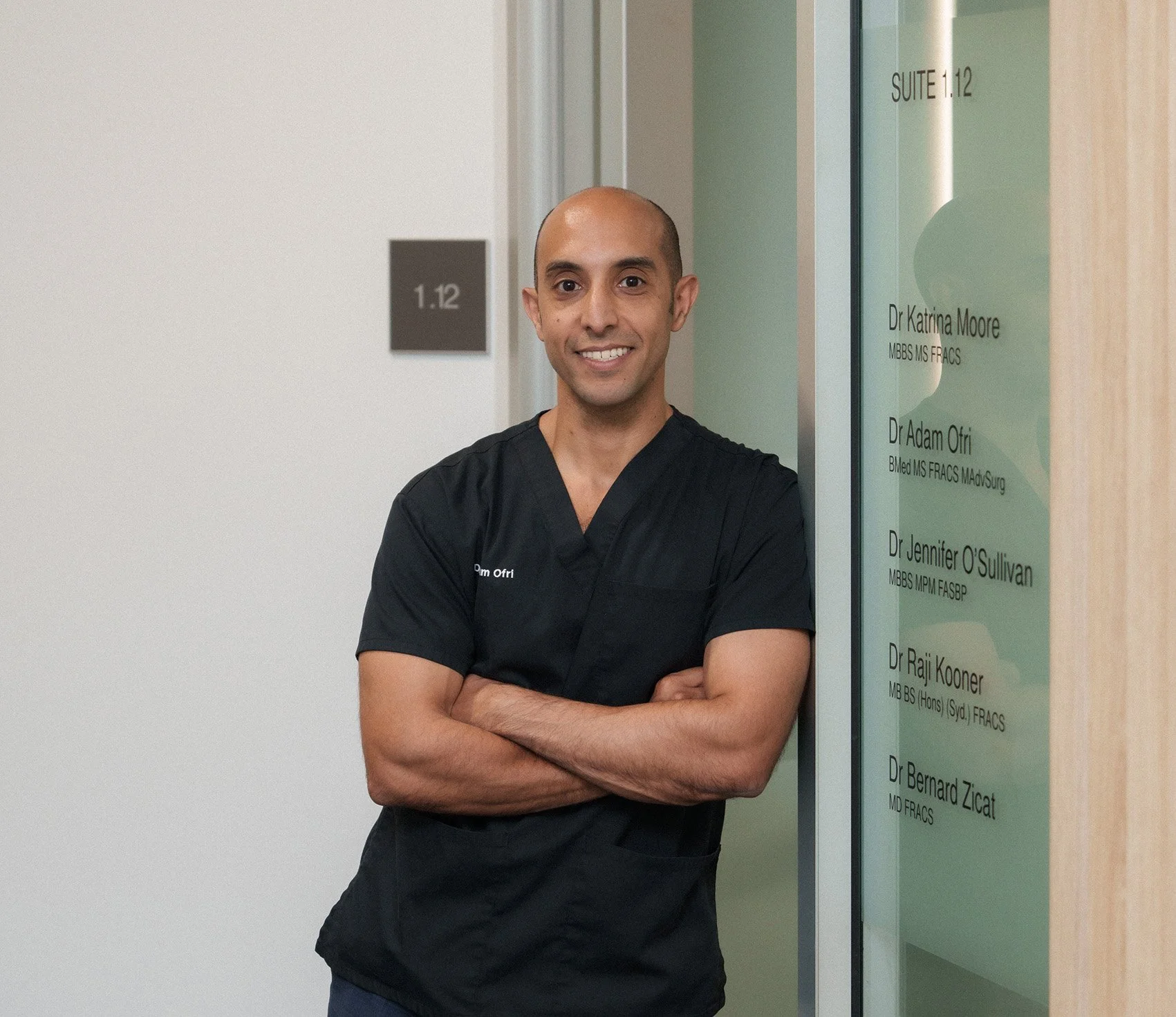
Why Choose Dr Adam Ofri for Your Breast Care?
When you choose me as your surgeon, your care is guided by compassion, clear communication, and the highest surgical standards. My approach focuses on achieving the best possible cancer outcomes while preserving comfort, appearance, and quality of life.
As an oncoplastic breast surgeon, I combine advanced cancer surgery with aesthetic precision. My academic and research involvement ensures that every patient benefits from the latest techniques and evidence-based practice.