
Mastectomy Surgery
A breast cancer diagnosis can be an emotional and challenging experience. Dr Adam Ofri is committed to providing clear, compassionate, and personalised care to guide patients through every stage of their treatment journey. Surgery remains one of the most effective treatments for breast cancer, and the type of surgery is tailored to each individual’s diagnosis and needs.
The two main surgical approaches are Mastectomy (removal of the entire breast) and Breast-conserving Surgery (also called Lumpectomy or wide local excision).
What Is a Mastectomy?
A mastectomy involves the complete removal of breast tissue. The decision to proceed with a mastectomy rather than breast-conserving surgery depends on multiple factors, including tumour size, type, and its relationship to breast volume. Whenever a mastectomy is recommended, Dr Ofri also discusses suitable reconstruction options so patients can make an informed and confident choice. Ultimately, the decision for reconstruction is entirely yours.
Types of Mastectomy and Reconstruction Options
There are several types of mastectomy procedures, and evidence shows no significant difference between them in terms of recurrence risk. The choice of approach is guided by your diagnosis, anatomy, and personal preferences.
Simple mastectomy: Removal of the entire breast, including overlying skin and nipple. This results in a ‘flat closure,’ which is a safe and valid option for many patients
Skin-sparing mastectomy: The breast tissue is removed while preserving most of the skin envelope, allowing for immediate reconstruction.
Nipple-sparing mastectomy: The entire breast is removed while preserving the nipple and areola for a more natural cosmetic outcome. It’s important to note that the nipple usually loses sensation after surgery and serves a cosmetic rather than functional purpose.
Every patient offered a mastectomy should also be offered reconstruction. There are two main approaches:
Implant-based reconstruction: Using a silicone implant to recreate the breast mound. As a BreastSurgANZ-accredited surgeon, Dr Ofri performs implant-based reconstruction, often as an immediate procedure during the same operation as the mastectomy.
Autologous (DIEP) reconstruction: Using tissue from another part of your body (commonly the abdomen) to form a new breast. This is performed in collaboration with a plastic surgeon and can provide a natural result with the added benefit of abdominal contouring.
Dr Ofri takes time to ensure you understand each option, its risks, and the reasoning behind his recommendations, supporting you to make the best choice for your situation.
What happens during Mastectomy Surgery?
Mastectomy surgery is typically performed at the Mater Hospital in Sydney. Excluding DIEP reconstructions, most patients stay in hospital for approximately two days. A small drain is usually placed to prevent fluid build-up (seroma) and is removed within 24 to 48 hours. Dressings remain on for two weeks, and a supportive bra or binder is applied. Pain following a mastectomy is generally mild and well managed with standard analgesia.
Recovery After Mastectomy
Most patients can resume light activities within two weeks. Driving and heavy lifting (more than 5 kg) should be avoided during this period. You can shower as the dressings are water-resistant, but swimming and bathing should be avoided until your first postoperative review. Dr Ofri’s patients are encouraged to contact him or his team via his rooms or the patient portal if they have any questions during recovery.
Risks & Complications
All surgical procedures carry risks. The most common complications after mastectomy include bleeding, seroma (fluid collection), infection, and wound healing problems. Dr Ofri uses meticulous surgical technique and gentle tissue handling to reduce these risks and provides comprehensive guidance on what to look out for postoperatively.
Frequently Asked Questions about Mastectomy
Is a mastectomy painful?
Surprisingly, most patients experience minimal discomfort after surgery. The nerves that supply sensation to the skin are interrupted when the breast tissue is removed, meaning postoperative pain is often mild and managed effectively with oral pain relief.
What will my scarring be like?
The scars depend on the type of mastectomy performed. Dr Ofri always discusses and, when appropriate, draws diagrams during consultations to illustrate the expected scar pattern. He takes particular care to ensure scars heal neatly, recognising the positive impact of well-healed scars on long-term wellbeing.
Where will my surgery be performed?
Dr Ofri performs most mastectomies at the Mater Hospital in Sydney—one of Australia’s leading centres for breast cancer care, supported by a multidisciplinary team of medical and radiation oncologists, radiologists, and pathologists.
Will Medicare cover the cost of my mastectomy?
As a private surgeon, there is typically a gap payment, which varies depending on your private health insurance. For patients without private health cover, Dr Ofri can provide advice and referral to excellent surgeons within the public health system to ensure timely care.
Can I combine mastectomy with breast reconstruction?
Yes. All suitable patients undergoing mastectomy should be offered immediate reconstruction unless contraindicated. Dr Ofri is skilled in implant-based reconstruction and can often perform this in the same operation, helping to reduce recovery time and additional costs.
SYDNEY BREAST SURGEON
Why Choose Dr Adam Ofri for Your Breast Surgery?
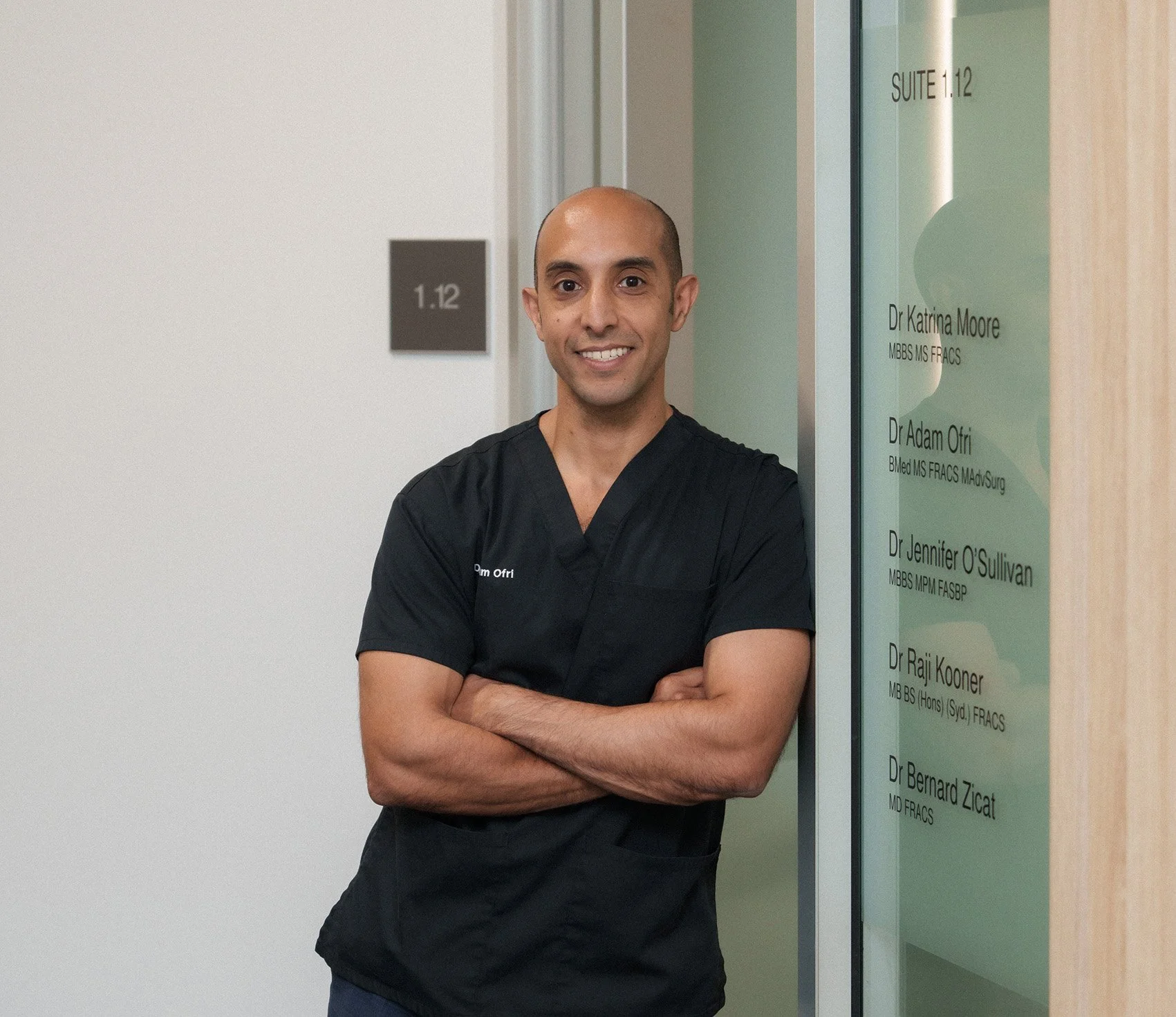
Dr Adam Ofri is a highly trained breast and general surgeon in Sydney with subspecialty expertise in breast cancer and reconstructive surgery. He takes the time to communicate clearly with each patient, ensuring they understand their diagnosis, treatment options, and recovery process. His active involvement in research and academia means he is continually updating his practice to align with the latest evidence-based care.
To discuss whether a mastectomy or breast-conserving surgery is appropriate for you, please contact Dr Adam Ofri’s rooms to arrange a consultation.