
Post Operative Care Instructions

INTRODUCTION
Recovering from breast surgery is an important part of your journey, and I always ensure that you are well supported during this time. Understanding what to expect after surgery helps you feel confident and prepared, and my team and I are always available to assist you with any concerns or questions.
After Your Surgery
After your surgery, you will wake up in the recovery area with a comfortable dressing over your surgical site. Some patients may have a small drain in place to remove any excess fluid that can accumulate under the skin. If a drain is used, I will provide detailed instructions regarding its care and removal.
You may feel mild tightness or discomfort around the breast or chest area. This is completely normal and can usually be managed with simple pain relief medications. My goal is always to minimise discomfort and ensure your recovery is as smooth as possible.
Wound Care
Your wound will be covered with a water-resistant dressing that should remain in place until your first post-operative appointment, usually around two weeks after surgery. You can shower with the dressing on, but please avoid soaking, swimming, or bathing until it is removed.
If the dressing begins to lift or leak, contact my office for advice. It is very important not to remove or replace the dressing yourself unless specifically instructed.
Drains
If you go home with a drain, it will usually stay in place for one to three days. The drain helps to prevent the build-up of fluid under the skin (seroma). I will show you how to record the amount of fluid drained each day, and we will remove it once drainage reduces to an acceptable level.
Pain Relief
Most patients experience only mild discomfort after breast surgery. I will prescribe pain medication for you to take as needed. It is better to take pain relief regularly for the first few days rather than waiting for pain to build up. Avoid taking any non-prescribed anti-inflammatory medications unless I have confirmed they are safe for you.
Activity & Rest
I recommend avoiding strenuous activity and heavy lifting (more than 5kg) for at least two weeks after surgery. You can move your arm gently and perform light daily activities such as eating, walking, and dressing. Avoid driving until you are comfortable moving your arm freely and are no longer taking strong pain medication.
You may feel more tired than usual for the first week or two, so it’s important to rest and listen to your body.
Recovery & Follow-up
I will review you approximately two weeks after surgery to check your wound and discuss your results. During this visit, we will talk about any further treatment that may be required, such as radiotherapy, and address any concerns you may have.
If you notice increased swelling, redness, pain, or discharge from your wound before this appointment, please contact my office promptly. My team and I are always available to guide you through your recovery.
Risks
Most patients recover very well after breast surgery, but as with any operation, there are potential risks. These include bleeding, infection, seroma (fluid build-up), or delayed wound healing. I use gentle tissue handling and precise surgical technique to minimise these risks and to ensure optimal healing and cosmetic outcomes.
Frequently Asked Questions (FAQs)
When can I shower after Breast Surgery?
You can shower 24 hours after surgery with the dressing on, as it is water-resistant. Avoid swimming or soaking until reviewed.
When can I drive after Breast Surgery?
Usually after two weeks, once you are no longer taking strong pain medications and can move comfortably.
When can I go back to work?
This depends on your type of surgery and your job. Many patients return to work after two to three weeks.
What if I notice swelling or fluid under my wound?
This may represent a seroma. Contact my office, and we can arrange a review to assess and manage it if needed.
SYDNEY BREAST SURGEON
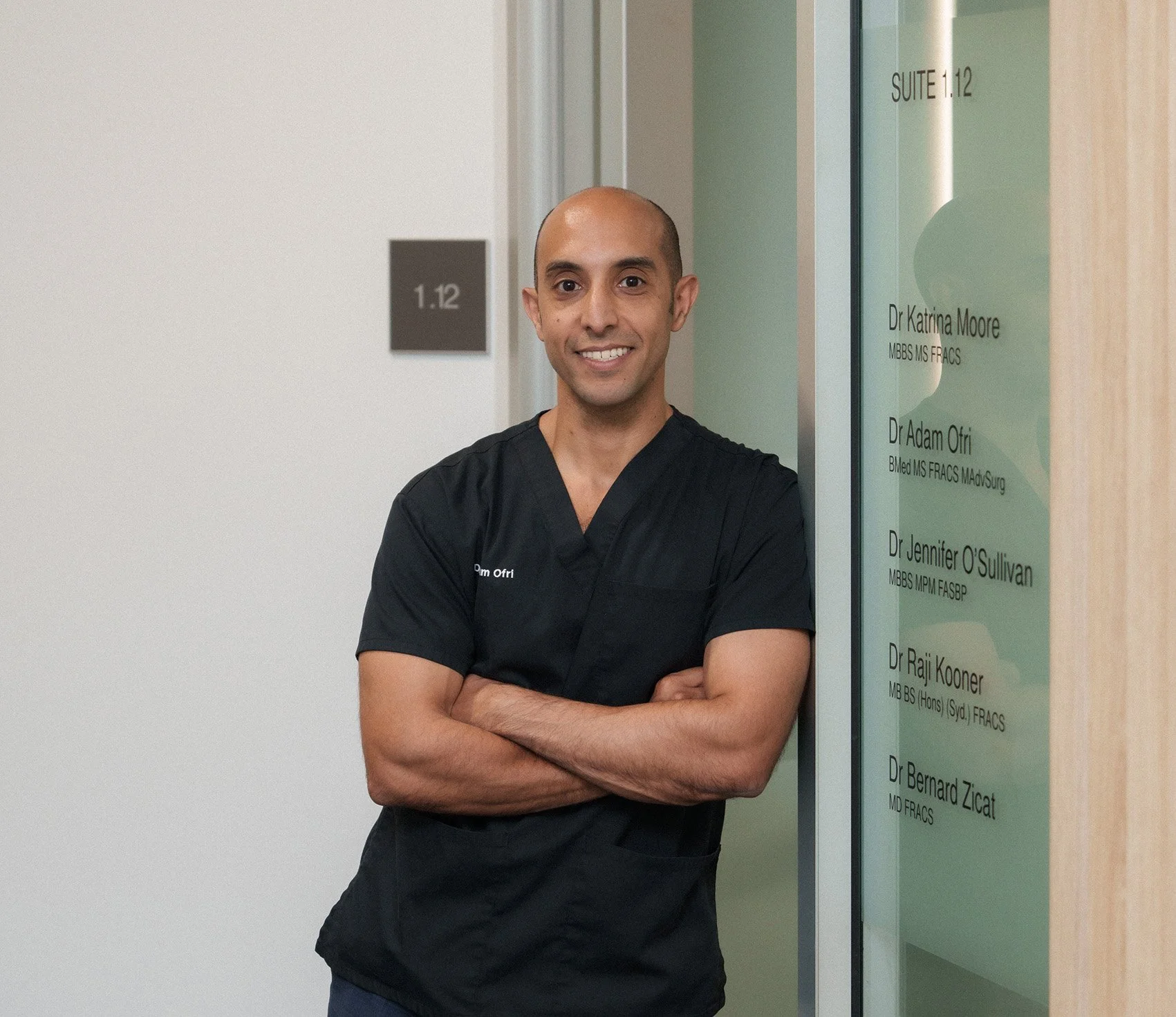
Why choose Dr Adam Ofri for your care?
As an academic breast and general surgeon, I am committed to providing compassionate and evidence-based care that combines advanced surgical technique with aesthetic and personal consideration. My focus is to support each patient — ensuring they feel informed, and empowered throughout their surgical journey.