
Risk Reducing Breast Surgery
INTRODUCTION
Risk-reducing breast surgery is a proactive option for women at significantly increased risk of developing breast cancer. It is most commonly considered by those who carry a high risk genet mutation (like BRCA1 or BRCA2), or who have a very strong family history of breast cancer.
This type of surgery involves removing the breast tissue before cancer develops, dramatically lowering the lifetime risk of breast cancer. It is a deeply personal decision and one that should follow careful discussion, genetic counselling, and a thorough understanding of the potential benefits and implications.
Who shuold consider Risk-Reducing Breast Surgery?
At present, the strongest evidence for benefit exists for women with BRCA1 or BRCA2 mutations, who may have up to a 70%+ lifetime risk of breast cancer. Surgery in these cases can reduce that risk by more than 90% and confers a significant overall survival benefit compared to those that do not undergo the surgery.
It is also important to discuss the risks associated with ovarian cancer, and Dr Ofri does refer accordingly to a gynaecologist to facilitate further discussion. If a patient elects to have prophylactic (risk-reducing) breast surgery, it is possible to coordinate concurrent gynaecology surgery (all under one anaesthetic and hospital admission).
Other gene mutations (such as PALB2 or TP53) or significant family histories may also warrant consideration, but these are assessed on a case-by-case basis.
Surgical Options
There are several approaches to risk-reducing breast surgery, and the choice depends on individual goals, anatomy, and preferences.
1. Simple mastectomy (going flat)
This involves removal of the breast tissue, skin, and nipple, leaving a flat chest wall contour. Some women prefer this option for its simplicity and to avoid the need for reconstruction.
2. Skin-sparing mastectomy
In this approach, the breast tissue is removed but most of the overlying skin is preserved. The nipple is removed, which allows for reconstruction using either an implant or your own tissue (such as a DIEP flap) to restore breast shape. I always flag 3D nipple tattooing which is an excellent cosmetic option after the wounds have healed.
3. Nipple-sparing mastectomy
This technique preserves both the breast skin and the nipple–areolar complex, while removing the breast tissue beneath. It can offer the most natural appearance after reconstruction. However, it is important to understand that the preserved nipple has no sensation, and in some cases, the blood supply to the nipple may be compromised.
Reconstruction Options
I typically offer immediate reconstruction at the time of risk-reducing surgery. This means you do not have to undergo a separate procedure later. But this is decided on a case-by-case basis.
Implant-based reconstruction uses silicone implants to recreate the breast shape.
Autologous (DIEP flap) reconstruction uses your own skin and fat from the lower abdomen to recreate a natural, soft breast. This approach avoids implants, ages naturally with the body, and is, in my opinion, the superior option when suitable.
The best approach will depend on your body type, preferences, and medical considerations.
Benefits and Limitations
Benefits:
Reduces breast cancer risk by over 90-95% in BRCA1/2 carriers.
Can provide significant peace of mind.
Allows immediate reconstruction for natural shape and confidence.
Limitations:
It is major surgery with associated recovery time and surgical risks.
Does not eliminate risk completely, as very small amounts of breast tissue can remain.
Nipple-sparing options sacrifice sensation.
There can be changes to body image and sexual wellbeing that require discussion and support.
Body Image and Sexual Health
Breasts are an important part of body image and sexual identity for many women.
Loss of breast tissue, changes in nipple sensation, and scars can affect confidence and intimacy.
These topics are an essential part of your surgical planning and postoperative support. I encourage open discussions about sexual wellbeing and emotional adjustment — as these are vital to recovery and satisfaction after surgery.
Psychological support and consultation with a breast care nurse or psychologist experienced in body image are always recommended.
Decision Making
Choosing risk-reducing surgery is a highly personal process. It involves balancing cancer risk, emotional wellbeing, surgical considerations, and life goals.
I will guide you through every step of this process, ensuring that your decision is fully informed and individually tailored. Together, we will discuss your medical history, reconstructive options, and what feels right for you.
SYDNEY BREAST SURGEON
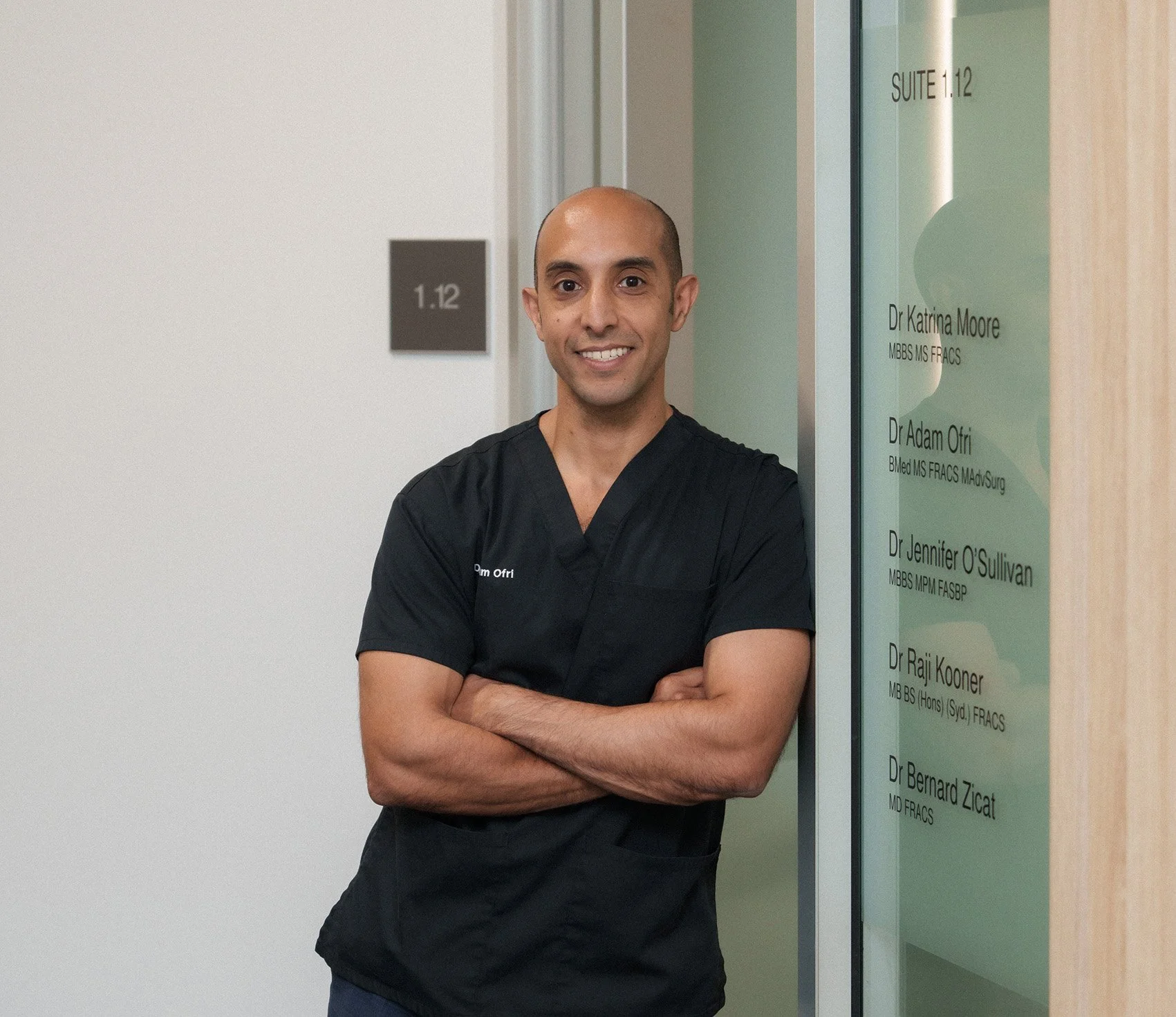
Why choose Dr Adam Ofri for your care?
As an academic breast and oncoplastic surgeon, I am committed to providing compassionate and evidence-based care that combines advanced surgical technique with aesthetic and personal consideration. My focus is to support each woman in making the right decision for her — ensuring she feels confident, informed, and empowered throughout her journey.