
Tailored Breast Screening
When it comes to breast cancer, early detection saves lives. As an academic breast surgeon, I know that breast screening should never be a “one-size-fits-all” process. Every woman’s risk is unique — influenced by many factors including age, breast density, family history, hormonal factors, and lifestyle. That is why I advocate for tailored breast screening, a modern, risk-adapted approach that goes beyond the traditional model used by population programs such as BreastScreen NSW.
What is Tailored Breast Screening?
Tailored breast screening means developing an individualised screening plan based on your personal risk of breast cancer. This involves assessing modifiable and non-modifiable factors — including genetics, breast density, reproductive history, and previous breast biopsies. Using this information, together with validated risk-assessment tools and the most recent published evidence, I can determine how often you should be screened, and which imaging modalities are most appropriate.
Breast Density & the Braid Trial
Breast density plays a crucial role in determining how effective mammography will be in detecting breast cancer. Dense breast tissue not only increases the risk of developing breast cancer but also makes mammograms harder to interpret — cancers can be masked by dense glandular tissue.
The BRAID trial (Breast Imaging Density Study) is one of the key research efforts currently investigating how women with dense breasts can benefit from personalised imaging strategies. This study supports the concept that breast density should directly influence screening methods — incorporating MRI, or contrast-enhanced mammography (instead of ultrasound) alongside traditional mammography to improve cancer detection rates.
I believe the BRAID trial reflects what I have already seen clinically — that contrast imaging is a superior way of screening the breasts over classical mammogram and ultrasound. By taking breast density into account, we can significantly improve detection accuracy and reduce the number of missed or delayed diagnoses.
How does Tailored Screening Differ from BreastScreen NSW
BreastScreen NSW provides excellent population-level screening for women aged 40+, offering a two-yearly mammogram at no cost. However, this timeline and imaging choice are designed for the average-risk woman — not for women with higher or more complex risk profiles.
Tailored screening offers several key advantages:
Individual frequency: Instead of the fixed two-year interval, screening frequency is adjusted according to your level of risk — some women may need annual screening, others every 18 months.
Advanced imaging: Women with dense breasts or increased risk can benefit from MRI or contrast-enhanced mammography, which are not offered in BreastScreen NSW.
Personal oversight: Your screening is interpreted in the context of your history and imaging trends, rather than in isolation.
Earlier detection: By using the right imaging modality and schedule, cancers can often be detected at an earlier, more treatable stage.
In short, tailored screening is a proactive, precision-based approach, compared to the more standardised, population-based approach used in routine public screening programs.
What does a Tailored Screening Plan involve?
When you see me for a breast screening consultation, I begin with a detailed risk assessment that includes:
Your personal history: including hormonal, reproductive, previous benign or malignant breast disease, lifestyle and environmental factors
Your family and genetic history
Breast density from prior imaging
From there, I design a tailored screening plan that may include:
Annual tomosynthesis (3D mammography)
MRI or contrast-enhanced mammography
Genetic assessment
Each plan is reviewed regularly and adjusted as your risk factors change.
Benefits of Tailored Breast Screening
Improved accuracy
Breast cancers are detected earlier, particularly in women with dense breasts.
Reduced unnecessary anxiety
By using appropriate imaging, false-positive results are minimised (less unnecessary breast biopsies).
Personal empowerment
Understanding your personal risk and having an individualised plan provides reassurance and control.
Better long-term outcomes
Early detection consistently leads to less invasive treatment and improved survival rates.
Frequently Asked Questions (FAQs)
Do I still need BreastScreen NSW if I have a tailored plan?
No — if you are on a personalised, specialist-guided screening program, your imaging will replace routine BreastScreen NSW checks. However, your results can still be shared with your GP for continuity of care.
Is tailored screening covered by Medicare?
Some components, such as mammograms and ultrasounds, may be partly covered. MRI or contrast-enhanced mammography may incur an out-of-pocket cost depending on indications and imaging centre policies.
How do I know if I have dense breasts?
Your breast density is assessed from your mammogram. I review and discuss these results with you in detail to ensure you understand how it affects your risk and imaging choices.
Is tailored screening suitable for younger women?
Yes — particularly for those with strong family histories or known genetic mutations. Starting early and using the right imaging is critical for effective prevention.
SYDNEY BREAST SURGEON
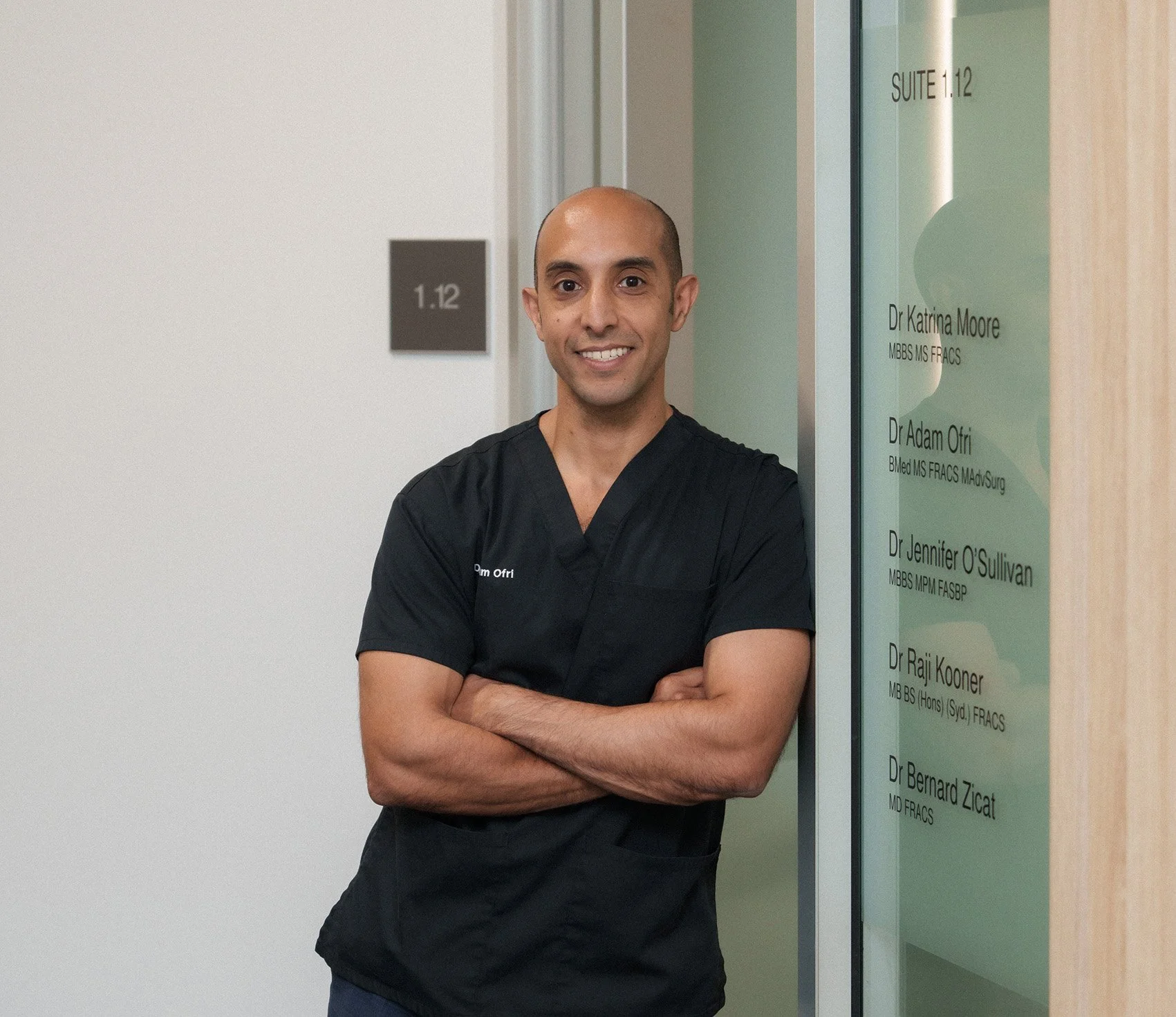
Why Choose Dr Ofri for your Breast Care?
I am deeply committed to providing individualised breast care that reflects the latest research and best practice. As an oncoplastic breast surgeon, I integrate clinical expertise with an understanding of evolving breast-imaging technology to offer screening strategies that are both effective and evidence-based.
My involvement in academic and clinical research ensures my patients benefit from cutting-edge insights —which shape the future of personalised breast screening. When you choose me, you can trust that your care is guided by science, precision, and compassion at every step.